Aprende, programa y hackea… éticamente.
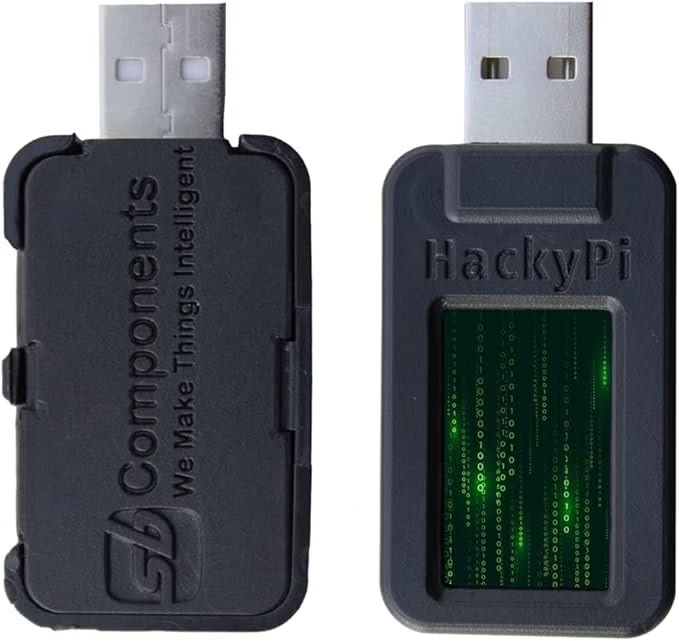
HackyPi es la plataforma educativa definitiva para cualquier persona interesada en explorar el mundo de la ciberseguridad, el hacking ético y la programación embebida.
Construido sobre el microcontrolador Raspberry Pi RP2040, cuenta con un procesador ARM Cortex-M0+ de doble núcleo, soporte para tarjeta SD, interfaz USB tipo A, pantalla TFT de 1,14 pulgadas y un botón de arranque integrado que permite una programación sencilla mediante arrastrar y soltar a través de almacenamiento masivo por USB.
Compatible con Windows, Mac y Linux, HackyPi no requiere controladores y ofrece soporte para Python y múltiples lenguajes mediante HidLibrary. Ya seas principiante o desarrollador avanzado, HackyPi es tu dispositivo ideal para experimentar con registro de datos, cifrado y mucho más—impulsando tus habilidades en un entorno práctico basado en hardware.
Características:
Procesador RP2040 ARM Cortex-M0+ de doble núcleo
USB tipo A plug-and-play sin necesidad de controladores
Compatible con múltiples plataformas: Windows, Mac y Linux
Pantalla TFT de 1,14″ + ranura para tarjeta SD
Hardware de código abierto + soporte para Python
Ideal para aprendizaje, creación de prototipos y hacking ético
Expert Review: HackyPi as a USB Security Testing Tool
The HackyPi is a Raspberry Pi RP2040-based USB attack platform that has earned its place alongside the USB Rubber Ducky and Bash Bunny as a go-to tool for USB-based penetration testing. Its compact form factor, disguised as an ordinary USB drive, makes it particularly effective for demonstrating the risks of unauthorized USB devices during security awareness training and red team assessments.
How Security Professionals Use the HackyPi
In authorized penetration tests, the HackyPi can execute pre-programmed keystroke injection payloads within seconds of being plugged into a target computer. This simulates real-world USB drop attacks where malicious devices are left in parking lots or common areas, hoping an employee will plug them in. Security teams use this to test organizational defenses against BadUSB attacks, evaluate endpoint protection solutions, and measure employee security awareness. The device supports custom payloads written in CircuitPython, making it highly flexible and easy to program for specific test scenarios.
Pros and Cons
Pros: Affordable entry point into USB security testing compared to commercial alternatives. Built on the RP2040 chip, which offers excellent performance and community support. Programmable with CircuitPython for rapid payload development. Small form factor makes it ideal for physical security demonstrations. The built-in display provides visual feedback during payload execution.
Cons: Requires programming knowledge to create custom payloads. Less mature ecosystem compared to Hak5 products. No built-in WiFi or Bluetooth for remote triggering. Detection by modern endpoint security solutions is possible if USB device policies are properly configured.
Final Verdict
The HackyPi offers exceptional value for security professionals who need a USB attack simulation tool for awareness training and penetration testing. Its open-source nature and CircuitPython support make it a flexible platform that can adapt to various testing scenarios. For organizations looking to demonstrate USB security risks to stakeholders, this tool provides a compelling and cost-effective solution.